Research
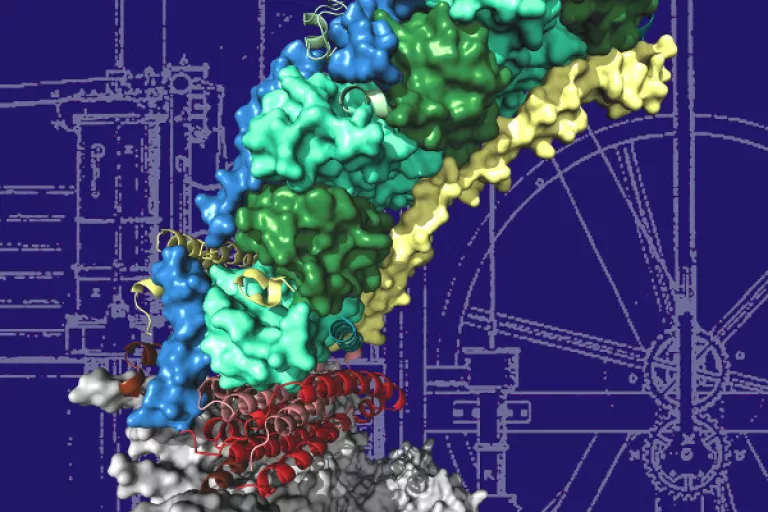
Structural Biology of Molecular Machines
Many proteins in the living cells function as molecular machines. Such machines are involved in energy conversion, synthesis of biopolymers, molecular transport, and many other processes. While molecular machines resemble human-made macroscopic machines, at the atomic scale their mechanisms are non-intuitive and differ drastically from their human-made analogs. We would like to understand the fundamental principles behind the mechanisms of such proteins. The function of protein-based molecular machines involves transitions between specific conformations that enable them to direct processes against their chemical potential by using chemical energy of fuel. In our laboratory we use single particle cryo-EM, to solve the structures of the proteins in the functionally important states and resolve kinetics of the transitions using time-resolved cryo-EM.
Structure of membrane proteins
Using single particle cryo-EM we study structures of membrane protein complexes involved in cell bioenergetics, transport and signaling. We use lipid nanodiscs to reconstitute purified membrane proteins into lipid environment closely mimicking biological membrane. Our laboratory has access to JELO cryoARM 300 electron microscope located on VUB campus and a part of CSB BECM facility.
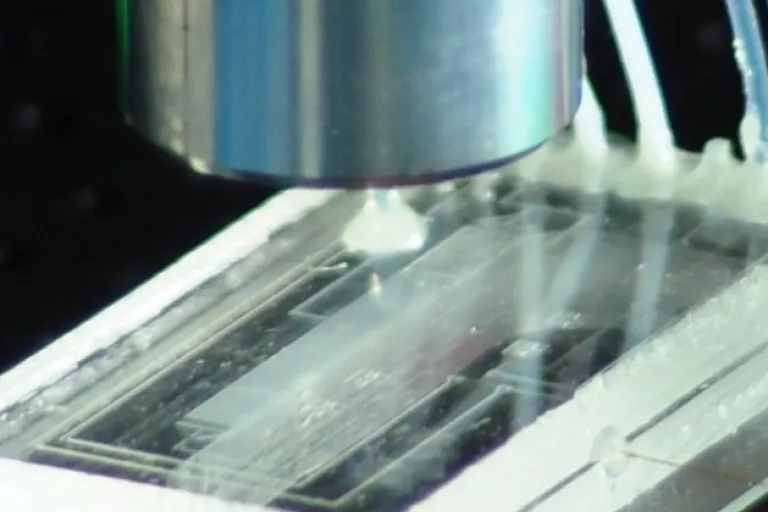
Microfluidics for cryo-EM
Our laboratory also works on method development. New approaches for cryo-EM that enable faster and better preparation of cryo-EM grids are being explored in the laboratory. A team of engineers develops microfluidic chips and integrated devices working hand in hand with structural biologists.